
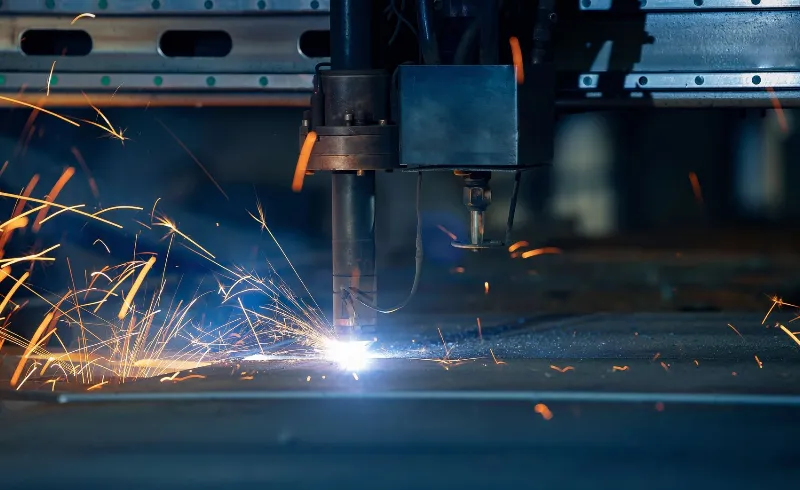
Plasma cutting is a fabrication process that uses a high-velocity jet of ionised gas (plasma) to cut through electrically conductive metals. An electric arc passes through gas such as air, nitrogen, or argon, creating plasma that can reach temperatures of up to 25,000°C. This intense heat melts the metal while the high-speed gas stream removes the molten material, producing clean and accurate cuts.
Plasma cutting is widely used across fabrication and engineering industries where speed, flexibility, and reliable cutting performance are required.
Fast, Efficient Metal Cutting for Fabrication
Plasma cutting is valued for its ability to cut a wide range of conductive metals quickly and efficiently. The process combines high temperatures with precision control, allowing fabricators to produce both simple and complex profiles across a variety of material types.
Compared with many traditional cutting techniques, plasma cutting offers significantly faster cutting speeds while maintaining reliable cut quality. It is particularly well suited to fabrication environments where large volumes of metal components must be produced quickly without sacrificing accuracy.
Because the process works across different metals and thicknesses, plasma cutting is widely used in workshops and industrial facilities that require versatile metal cutting capabilities.
Why Plasma Cutting Is Widely Used
Versatile Metal Cutting
Plasma cutting works across many electrically conductive metals including steel, stainless steel, aluminium, brass, copper, and titanium.
High Cutting Speed
The process can cut significantly faster than many traditional cutting methods, helping improve production efficiency.
Precision and Control
Modern plasma systems allow detailed cutting of curves, shapes, and profiles while maintaining consistent edge quality.
Cost-Effective Fabrication
Efficient consumable use and reduced preparation requirements make plasma cutting a practical option for many fabrication environments.
Flexible Operation
Plasma cutting equipment can be used in fixed workshop systems or portable units depending on the application.
Materials Suitable for Plasma Cutting
Plasma cutting is designed for electrically conductive metals and alloys. Mild steel and carbon steel are among the most commonly processed materials because they respond well to the plasma arc, producing clean and efficient cuts.
Stainless steel and aluminium can also be cut using plasma systems, although they require carefully controlled settings to maintain cut quality. Other metals such as copper, brass, and cast iron may also be processed depending on the cutting equipment and application requirements.
The flexibility of plasma cutting allows it to be used across a wide range of fabrication and manufacturing projects.
Industries That Use Plasma Cutting
Plasma cutting is used across many industries where metal fabrication is required. In automotive manufacturing, it is commonly used to cut chassis components, exhaust systems, and structural parts. Construction and infrastructure projects rely on plasma cutting to shape beams, brackets, and steel components used in buildings and bridges.
The process is also widely used in shipbuilding, heavy machinery manufacturing, and industrial equipment fabrication. Aerospace applications may involve cutting specialised alloys and structural components, while designers and artists often use plasma cutting to create signage, sculptures, and architectural metal features.
Because of its speed and flexibility, plasma cutting remains an essential process in modern metal fabrication.
Need reliable metal cutting for your next fabrication project?
Speak with the team about plasma cutting capabilities and profile cutting solutions.
Expert engineering solutions
We specialise in solving engineering challenges of all varieties, backed by traditional customer service. Our expert team delivers customised solutions spanning specification and functional design, estimate and risk assessment, drafting, fabrication, installation, project management, decommission and relocation, repair and maintenance. Whatever you need, consider it done.


Our clients


© Copyright DARK KNIGHT ENGINEERING 2026 All rights reserved. | Website by Brilliant Digital.